

Ever walk into a room and think, “Why does this feel either empty like a dentist waiting room… or crowded like a clearance aisle?” The fix is Balancing Furniture and Decor—getting the big pieces and the pretty pieces to cooperate so your space feels intentional, comfortable, and actually usable.
1) The Two Extremes: “Bare” vs “Busy”
Most rooms go wrong in one of two directions: too much furniture (no breathing room) or too much decor (visual noise). Balancing Furniture and Decor is simply finding the sweet spot where the room looks styled and works for real life.
- Bare room signs: echoes, nothing to rest your eyes on, everything feels temporary.
- Busy room signs: every surface is full, your brain feels “itchy,” cleaning feels impossible.
- Sweet spot: clear pathways + a few strong focal points + calm negative space.
Living Room Decor Ideas by Theme
2) Start With Function First (Because You Live Here)
Before you add a single throw pillow, lock in how the room needs to function. The fastest way to succeed at Balancing Furniture and Decor is making sure furniture serves the room—not the other way around.
- Where do people naturally walk? (Keep pathways clear.)
- Where do you sit, read, eat, work, or relax?
- What needs storage so it doesn’t become countertop clutter?
- What’s the “main moment” of the room (TV wall, fireplace, bed, dining table)?
How to Keep Decor Cohesive
3) The 60/30/10 Rule for Visual Weight
This is a decorator cheat code. Use a simple ratio to keep the room from feeling lopsided. Think of Balancing Furniture and Decor as balancing visual “weight,” not just items.
- 60%: big furniture + large surfaces (sofa, bed, table, large rug)
- 30%: supporting pieces (chairs, side tables, console, storage)
- 10%: decor accents (art, lamps, textiles, plants, objects)
If your room feels chaotic, your “10%” is probably acting like 40%.
4) Pick a Star, Then Give It Backup
Rooms look best when there’s a clear lead actor. Then everything else supports it. This is a core principle of Balancing Furniture and Decor.
- Star furniture ideas: statement sofa, bold headboard, dining table, vintage credenza
- Star decor ideas: big art piece, oversized mirror, dramatic light fixture, gallery wall
- Support rule: If you have a statement sofa, keep pillows simpler. If you have loud art, calm the accessories.
Living Room Decor Essentials
5) Scale Check: Match Decor Size to Furniture Size
Tiny decor on big furniture looks like it got lost. Huge decor on tiny furniture looks like it’s bullying it. Balancing Furniture and Decor is largely a scale problem (and totally fixable).
- Over a sofa: choose large art (or a grouped set) that fills the space.
- On a coffee table: use a tray + a few varied-height items (not 12 mini objects).
- On a dresser/console: use one tall anchor (lamp or vase) + one medium + one small.
- On shelves: mix books, objects, and breathing room—don’t fill every inch.
Popular Decor Themes
6) The “One Surface Rule” to Stop Clutter Decorating
If you’re constantly rearranging little items, you might be decorating every surface equally. A great method for Balancing Furniture and Decor is choosing ONE hero surface per room.
- Living room: mantel OR coffee table OR media console
- Bedroom: nightstands OR dresser top (not both overloaded)
- Dining room: table centerpiece OR buffet styling (choose one to emphasize)
- Entry: console table moment, keep everything else clean
7) Layer Like a Pro: Soft + Hard + Natural
Good rooms feel balanced because they mix textures. If your space feels flat or harsh, the fix is often texture layering—one of the easiest wins in Balancing Furniture and Decor.
- Soft: rugs, curtains, pillows, throws, upholstered pieces
- Hard: wood, metal, glass, ceramics, stone
- Natural: plants, woven baskets, linen, jute, rattan
Example: Leather sofa (hard vibe) + knit throw (soft) + plant (natural) = instant balance.
8) Use “Empty Space” as Decor (Yes, Empty Counts)
Negative space is not wasted space—it’s what makes your decor look intentional. When you’re practicing Balancing Furniture and Decor, leave some areas blank on purpose.
- Leave a few inches between objects on surfaces.
- Don’t fill every wall—one strong art moment can be enough.
- Let shelves have gaps so items can “breathe.”
- Keep floors visible around furniture for a lighter feel.
9) Quick Room Recipes (Steal These Combos)
Here are easy “done-for-you” formulas that make Balancing Furniture and Decor almost automatic.
- Coffee Table: tray + (stack of books) + (candle) + (small plant) + (one personal object)
- Console Table: lamp + tall vase/branches + bowl/tray for keys + 1–2 framed pieces
- Bed: 2 sleeping pillows + 2–3 decorative pillows + one throw (stop at one throw!)
- Shelf: books (horizontal + vertical) + one sculptural object + one basket + one plant
- Corner: floor lamp + plant + small stool or basket
10) The 5-Minute Balance Check (Before You Buy Anything)
Before you add more stuff, do this quick audit. It’ll reveal exactly what your room needs for Balancing Furniture and Decor—and it often costs $0.
- Too crowded? remove one small piece of furniture or clear one surface.
- Too empty? add one big grounding item (rug, curtains, large art, mirror).
- Too matchy? add one contrasting texture (woven, velvet, wood, ceramic).
- Too random? repeat one finish (wood tone, metal, color) in 3 places.
- Still off? check scale—upgrade tiny decor to fewer, larger pieces.
Remember: the best rooms aren’t the ones with the most decor. They’re the ones with the best balance.
More Theme Ideas You Might Like
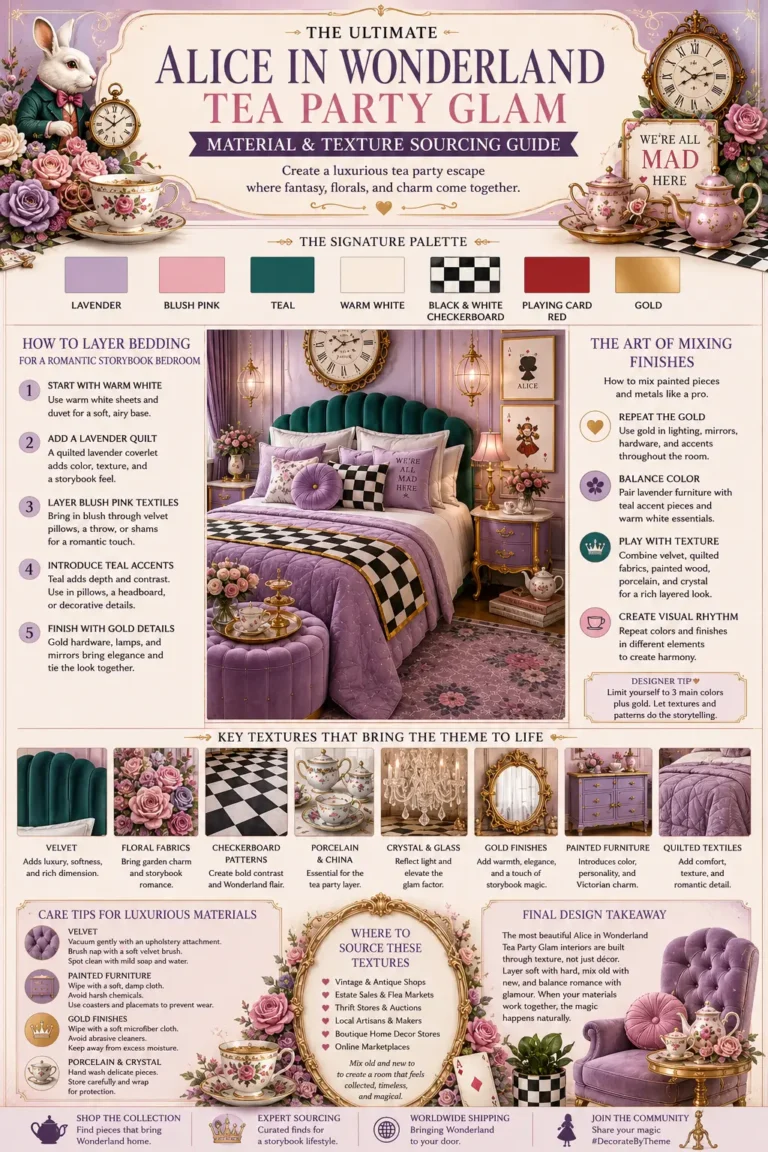
The Ultimate Alice in Wonderland Tea Party Glam Material & Texture Sourcing Guide
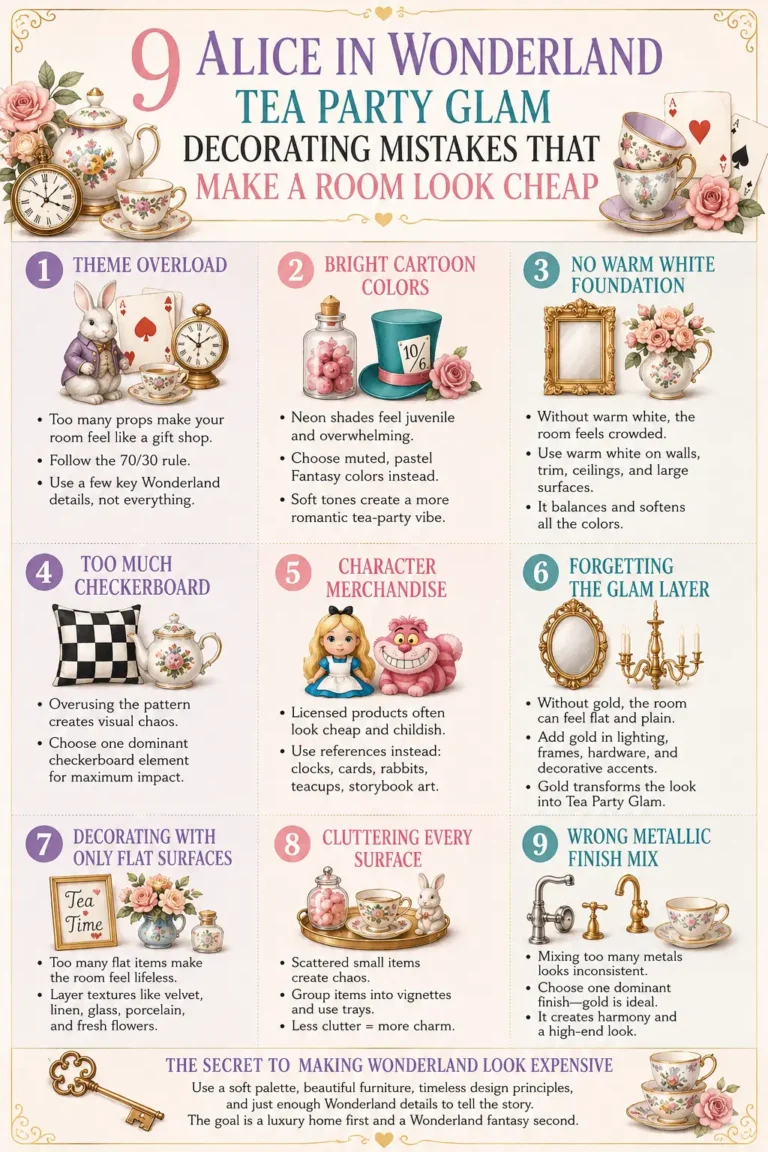
9 Alice in Wonderland Tea Party Glam Decorating Mistakes That Make a Room Look Cheap
How to Prioritize Decor Changes: Upgrade Your Space Without Doing Everything at Once
Using Lighting to Set the Mood: Easy Ways to Make Any Room Feel Cozy, Bright, or Dramatic
Creating a Restful Bedroom: Simple Decor Moves That Make Your Room Feel Like a Retreat
How to Keep Decor Cohesive: Make Your Home Look Intentional (Even If You’re Chaotic)
How to Prioritize Decor Spending
Mixing Modern and Traditional Decor: Finding Harmony Between Sleek and Classic